Regional specialties from Germany – Part 1: Cologne
Series: German cuisine – Food at our locations
When you think of Cologne, the first things that probably come to mind are the cathedral and the Cologne Carnival. But the city also has some regional delicacies to offer. Cologne cuisine is like the people themselves – honest, down-to-earth, and relaxed. In this article, we'll introduce you to a few Rhineland classics. If you want to experience Cologne's culinary scene, you should definitely try these sweet and savoury specialties.
Himmel un Ääd – when heaven and earth meet on your plate
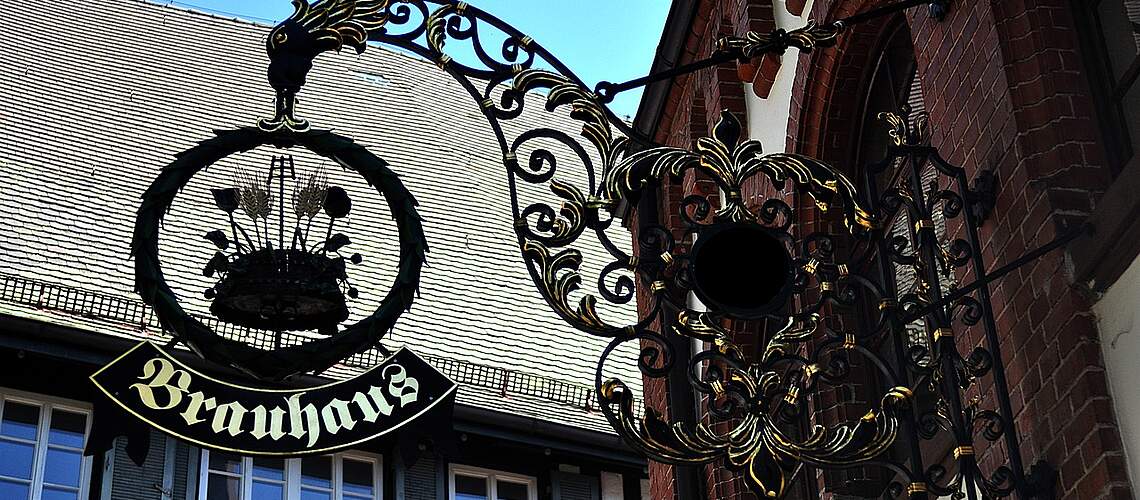
“Himmel un Ääd”1 (cologne dialect for “Heaven and Earth”) is a classic dish in the Rhineland that you can order in any Cologne Brauhaus2. It consists of mashed potatoes, apple compote, and ‘Flönz’ (Cologne dialect for “blood sausage”). The dish is often served with braised onions.
The name “Heaven and Earth” refers to the two main ingredients of the dish: apples, which grow on trees in heaven, and potatoes, which come from the earth.
1in standard German, “Himmel und Erde”
2typical german brewery restaurant
Ähzezupp – Cologne's favorite soup
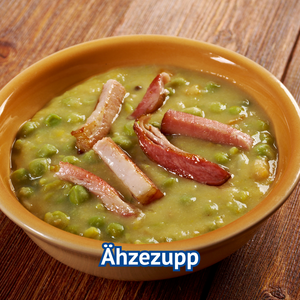
“Ähzezupp” is the Cologne term for “pea soup” – a particularly popular dish during the cold season. In Cologne and the surrounding area, Ähzezupp is traditionally prepared with various vegetables, including potatoes, carrots, leeks, and onions. It also usually contains meat, such as bacon and Mettwurst3.
When preparing the soup, it is important to cook the peas until they break down and take on a sloppy consistency.
3german pork sausage
Rievkooche – crispy, greasy, and delicious
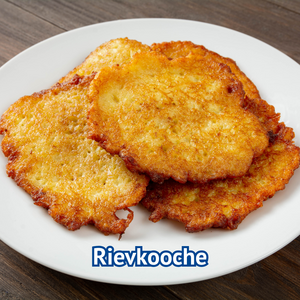
“Rievkooche”4 are also known as potato pancakes in other regions. They are made from grated potatoes mixed with onions and egg, shaped into palm-sized patties, and fried in hot fat until crispy. They are traditionally served with apple sauce or beetroot syrup. For those who like it savoury, fresh smoked salmon is served with the potato pancakes.
You can get this speciality in any Cologne Brauhaus, and you will also find a “Rievkooche” stand at most Christmas markets. Don't worry, you can smell it from a mile away. 😊
4“Reibekuchen” in standard German
Halve Hahn und Mettbrötchen – two classics for a small bite
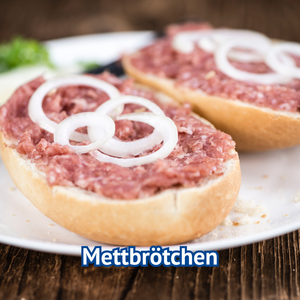
The “Halve Hahn” and the “Mettbrötchen” are more for a light snack and are particularly popular during the carnival season as part of a Cologne-style breakfast or as a quick bite in a pub.
Although “Halve Hahn” translates as “half a chicken,” this Rhineland specialty is something else entirely: if you order a “Halven Hahn” in Cologne, you will receive a sliced Röggelchen (cologne dialect for “rye roll”) topped with butter, a thick slice of medium-aged Gouda, mustard, and fresh onions.
The Mettbrötchen, on the other hand, lives up to its name. In Cologne, the Mettbrötchen usually consists of a rye roll topped with butter, fresh Mett (raw minced pork), salt & pepper, and fresh onions.
All these Cologne dishes are best enjoyed in company – preferably with a Kölsch (regional beer) in your hand.
Muuzemändelcher – Something sweet for carnival season
“Muuzemändelcher”5 are small, almond-shaped pieces of dough fried in fat and make a perfect sweet treat to finish off your meal. The dough consists of flour, eggs, butter, sugar, and ground almonds. After baking, the Muuzen are rolled in cinnamon and sugar while still hot. During Carnival season, you can find them in many bakeries in Cologne, or you can try baking them yourself at home.
5“Mutzenmandeln” in standard german
If you would like to experience the city of Cologne for yourself and learn German at the same time, feel free to visit our Carl Duisberg Training Center Cologne. Our German courses are accompanied by a varied leisure program.
Are you planning to celebrate Carnival in Cologne? With our articles on the Cologne dialect and the basics of Cologne Carnival, you will be perfectly prepared!
